
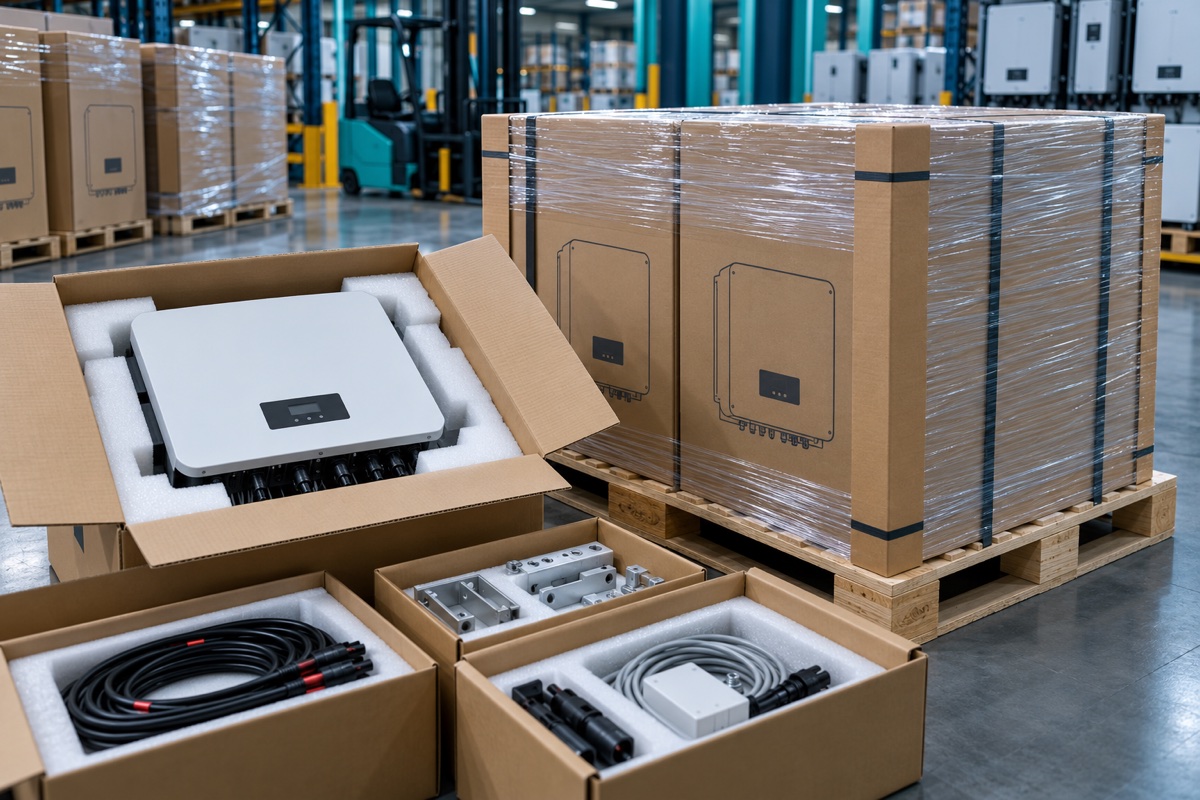
Solar inverter shipments may include the main device, cables, connectors and mounting parts. Carton layout should prevent pressure on sensitive connection areas while ensuring every accessory matches the order.
This guide covers “Carton Layout for Solar Inverters and Accessories.” Confirm product-specific limits in current supplier documentation and validate the proposed pack under representative handling conditions.
Support the unit away from sensitive points
Follow supplier packaging and orientation. Check support placement on a sample so connectors, displays or cooling fins do not take direct load. If antistatic or specialist protective packaging is required, determine it from the product owner’s technical requirements.
Identify cables and mounting parts separately
Secure cables in a separate compartment while respecting supplier bend limits. Arrange screws, brackets and documents in small labelled packs, matching contents to a checklist and product code. Check for missing or loose parts before closure.
Verify weight and orientation for pallet shipment
Assess the filled carton’s centre of gravity and pallet base. Stretch wrap may contain the carton unit; do not wrap the device directly in a way that loads connections. Keep electronic handling marks visible and inspect for impact or crushing after loading.
Request a technical assessment
For “Carton Layout for Solar Inverters and Accessories,” share the product and carton dimensions, application method and transport route so the packaging steps can be reviewed against the actual workflow.
Frequently asked questions
Can inverter cables share one compartment?
They may be placed separately and secured if contact, bending and connector risks are controlled under supplier guidance.
Who decides whether antistatic packaging is required?
The manufacturer or product owner sets technical requirements; general outer packaging should not be assumed to provide that protection.