
Basins, cisterns and other sanitaryware have hard surfaces and fragile shapes. Packaging should address not only impact but also movement inside the carton, pressure on protrusions and crushing of lower cartons in a pallet stack.
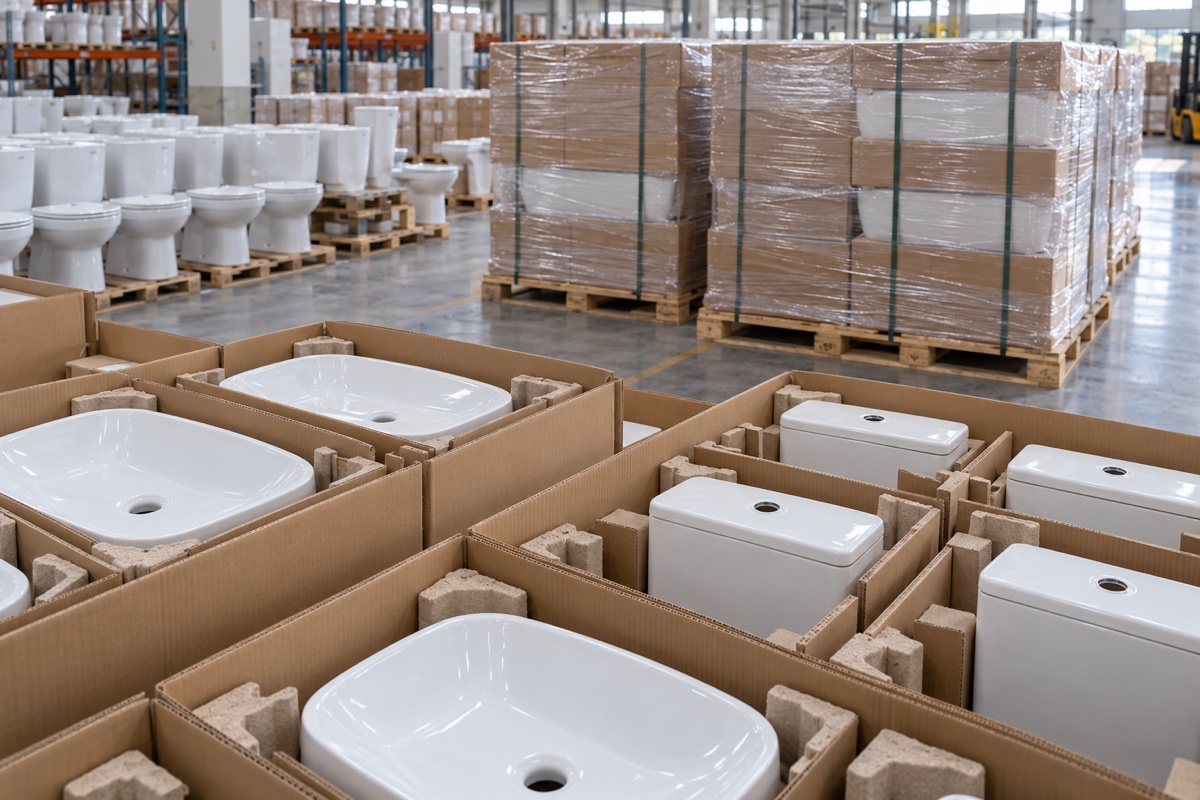
This guide covers “How to Package Ceramic Basins and Sanitaryware.” Confirm product-specific limits in current supplier documentation and validate the proposed pack under representative handling conditions.
Use internal supports that follow the product shape
Moulded supports, dividers or suitable separators should follow the product profile without loading thin edges or connection points. Check movement and contact points after packing. Do not assume one insert layout suits every model.
Protect carton closure and product identification
Test carton suitability with representative packed weight and stacking conditions. Tape should contact the flap joint evenly without covering handling marks. Keep orientation, model identification and any required fragile-content marks visible.
Distribute pressure in the pallet pattern
Seat carton bases fully on the pallet and use a layer pattern suited to product orientation. Stretch wrapping may gather the unit, but excessive tension can crush cartons or load the product against its inserts. Track breakage, cracks and surface marks at receipt.
Request a technical assessment
For “How to Package Ceramic Basins and Sanitaryware,” share the product and carton dimensions, application method and transport route so the packaging steps can be reviewed against the actual workflow.
Frequently asked questions
Is foam alone enough for fragile ceramics?
Protection depends on product geometry and transit conditions; test support contact points with the actual product.
Does pallet wrap prevent sanitaryware breakage?
It only helps contain the outer unit; breakage protection comes from suitable internal packaging and stack design.