
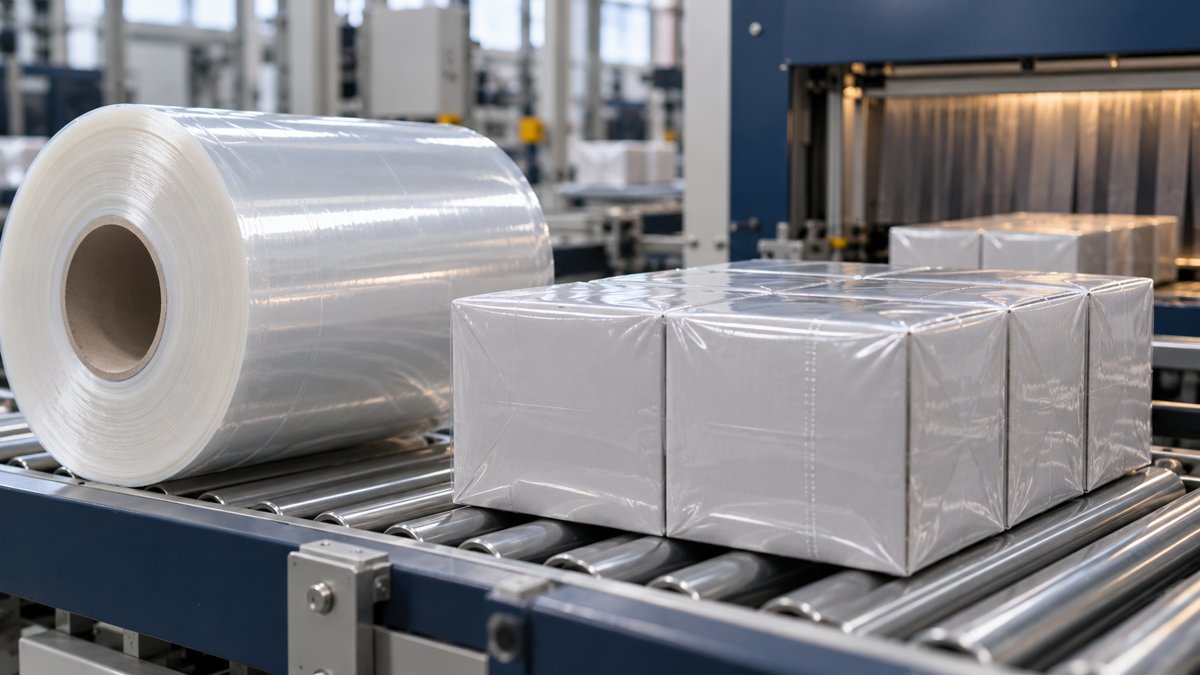
Polyolefin (POF) shrink film conforms around a product when heat is applied. Selecting it involves more than choosing a thickness: product shape, sealing equipment, tunnel conditions and distribution stresses all matter.
1. Define the product and its handling conditions
Record product dimensions, weight and sharp edges. An angular pack can require different puncture and seal performance from a round, lightweight item. For multipacks, consider friction between items and stacking during storage.
2. Match the film type to the application
Standard POF can be a starting point for general packaging. Higher-strength options may be considered when greater resistance is needed. For chilled or humid environments, antifog film can help reduce fogging, depending on the film and storage conditions. For heat-sensitive products, discuss low-temperature shrink options with the supplier.
3. Check machine compatibility
Sealer type, production speed, roll dimensions and flat or centre-folded film feed affect selection. Film width must wrap the item while leaving sufficient room for the seal. Choose width and thickness using product dimensions and equipment guidance; thinner film does not automatically mean lower consumption or less waste.
4. Validate sealing and tunnel settings
Adjust sealing temperature, contact time and pressure, then tunnel temperature, airflow and conveyor speed for the specific film and product. If seals are weak or the wrap wrinkles, change one setting at a time. Settings that work for one item or film may not work for another.
5. Pre-dispatch checklist
- Are seals free from openings, scorching and irregularities?
- Does film conform around corners without puncturing?
- Does the pack retain its appearance in storage and transit?
- Are roll changes, line speed and waste acceptable?
- If food contact is required, is documentation available for the specific film?
Record sample and line-trial results. Request the relevant technical data sheet and any applicable compliance documents from the supplier. Recycling options depend on film construction and local collection arrangements.