
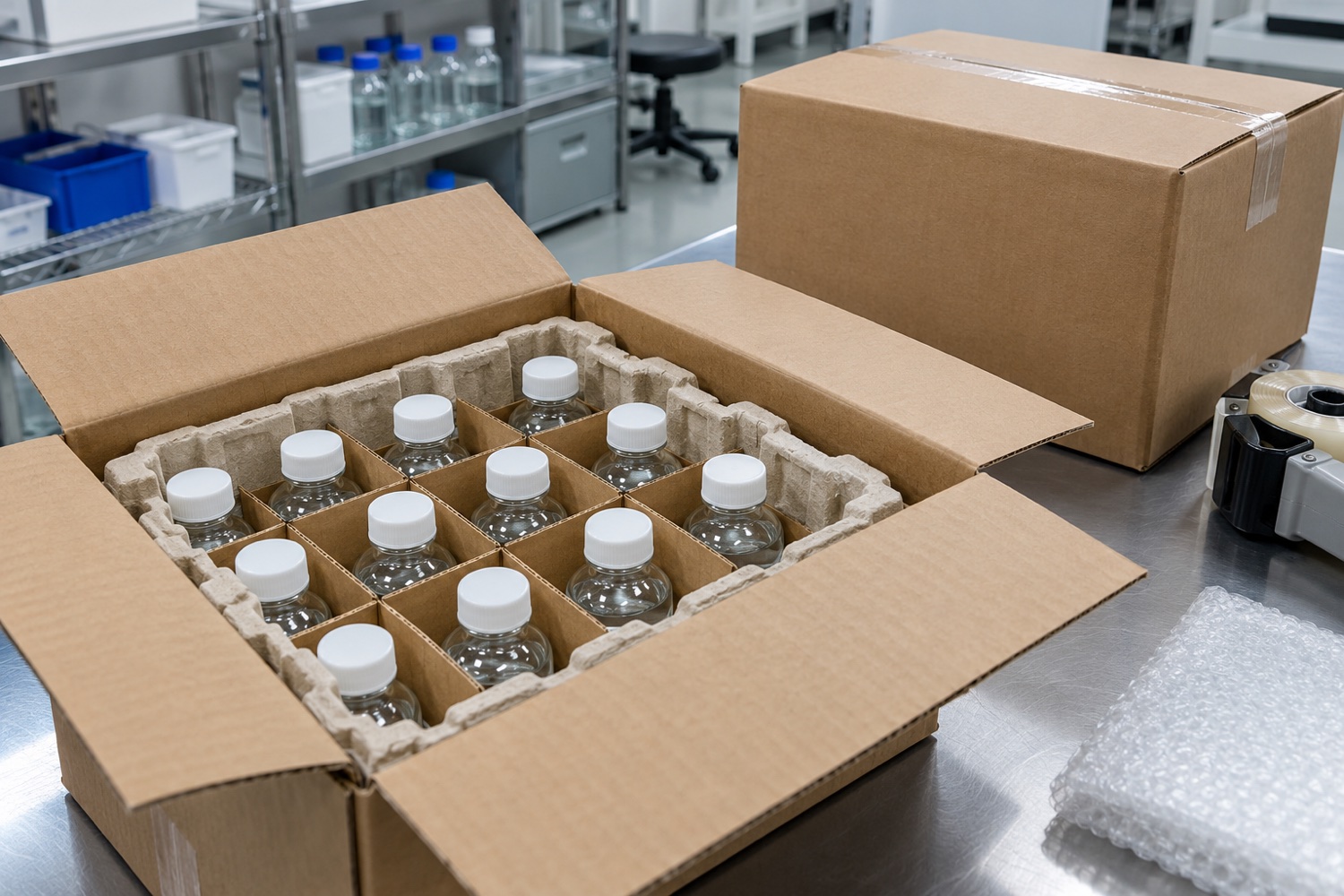
Laboratory bottles may be small, but breakage or leakage can affect other goods, paperwork and handling equipment in the same shipment. First, have a qualified person determine the contents’ hazard classification and transport rules; then design closures, secondary containment, dividers and the outer carton. This guide does not replace dangerous-goods classification or shipping approval.
Determine transport requirements from the contents
The chemical identity, concentration, quantity and hazard class can affect packaging and marking requirements. Before dispatch, review the safety data sheet and applicable transport rules with a dangerous-goods specialist. Do not assume sample-shipment or limited-quantity provisions apply.
The glass bottle must be closed with a compatible cap and, where required, an inner seal. Product classification and transport instructions determine whether a secondary leakproof bag or absorbent material is needed.
Secure bottles in separate positions
Corrugated or moulded dividers should prevent bottle-to-bottle contact and limit tipping. Support the body without creating pressure at the neck or cap. If bottle sizes vary, do not force one divider size across all products.
Avoid voids, while ensuring that a tight cell does not stress the glass. If absorbent layers are used, make sure they do not obscure product and lot identification or prevent leak inspection when required.
Select and seal the outer carton
The outer carton should be compatible with the inner pack, undamaged and suited to the shipment weight. Packing tape should seal the closure seams fully; test the selected tape on the actual board and under application conditions.
Prepare exterior labels and hazard marks in accordance with applicable regulations and carrier instructions. A visible label does not prove that the package or classification is correct.
Maintain traceability and response readiness
Record bottle count, product code, lot and inner/outer pack checks in the dispatch record. Train shifts in how to isolate a damaged carton and notify the responsible person.
Declare the contents and provide required documents to the carrier. If reusing a carton, remove old markings and apply the correct marks for the new shipment.
Sources and further reading
Accessed 28 October 2026. Follow current manufacturer, carrier and applicable regulatory instructions for the actual shipment.
Review packaging for your process
Share product dimensions, pack configuration and shipping route so suitable packaging options can be reviewed.
Frequently asked questions
Is a divided carton alone enough for laboratory bottles?
Not always. Depending on the contents’ classification, secondary containment, absorbent material or specific marks may be required; confirm the rules with a specialist.
Must every bottle ship upright?
Follow product and transport instructions. Where upright shipping is required, dividers and orientation marks should support it.
Can stretch film replace dangerous-goods marks?
No. Pallet wrap does not replace compliant packaging or required labelling.