
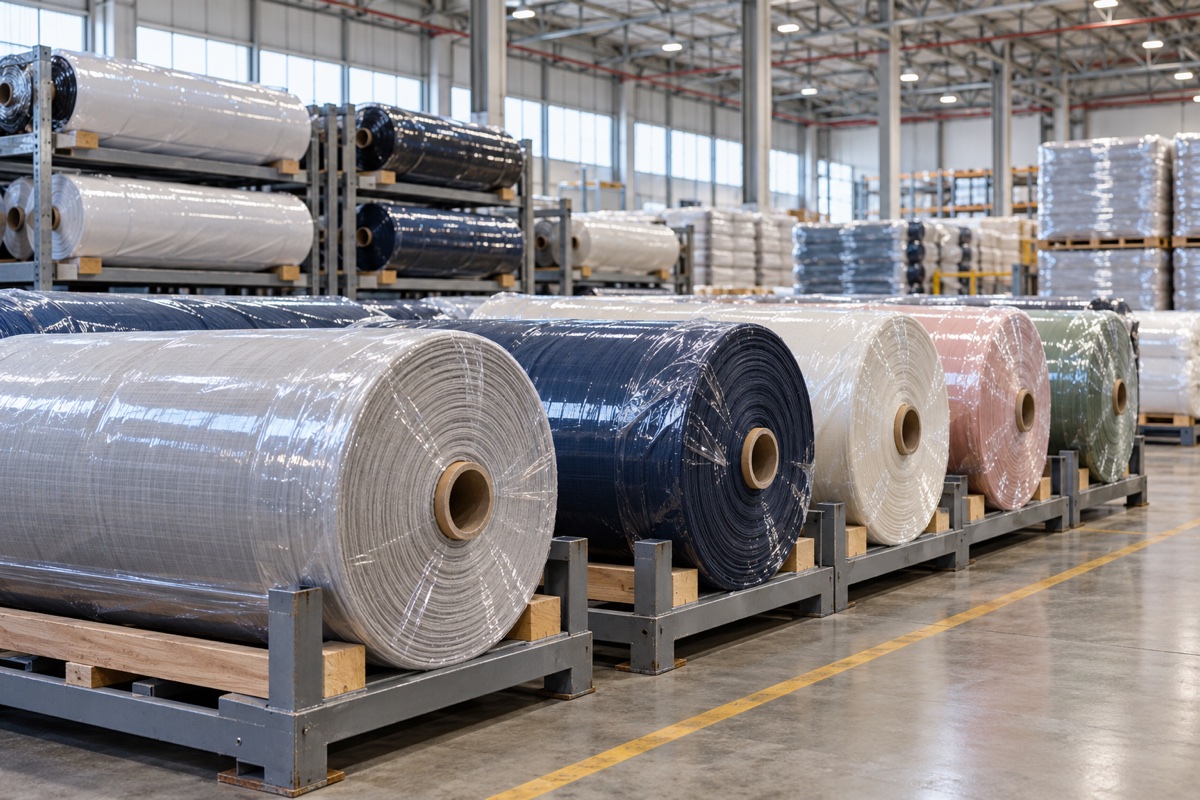
Fabric rolls may be stored horizontally on supports, on pallets or in hanging systems depending on product and shipping method. Packaging should help keep surfaces clean, prevent crushed roll edges and preserve product identification.
This guide covers “Storage and Shipping Protection for Fabric Rolls.” Confirm product-specific limits in current supplier documentation and validate the proposed pack under representative handling conditions.
Protect roll surfaces and edges
A suitable outer cover may reduce dust and splash exposure; test compatibility with dye, finish and fabric surface first. Keep roll ends and edges away from rack or carrier contact. Follow facility moisture and temperature procedures for longer storage.
Control supports and storage orientation
Use supports matched to roll diameter, weight and core structure; avoid prolonged point pressure that can flatten the fabric. Keep different product codes separated. For hanging transport, check the suspension points and roll movement.
Plan identification with the shipping unit
Keep roll code, colour, batch and length visible; do not cover barcodes with outer wrapping. For pallet shipping, assess edge guards and suitable wrapping without assuming they alone prevent rolling. Record checks at loading and receipt.
Request a technical assessment
For “Storage and Shipping Protection for Fabric Rolls,” share the product and carton dimensions, application method and transport route so the packaging steps can be reviewed against the actual workflow.
Frequently asked questions
Can fabric rolls be stretch-wrapped?
Only after checking film compatibility with the textile and any ventilation needs; wrapping does not replace carrier restraint.
Can rolls be stored upright?
Suitable orientation and stacking depend on roll construction, support and supplier guidance.