
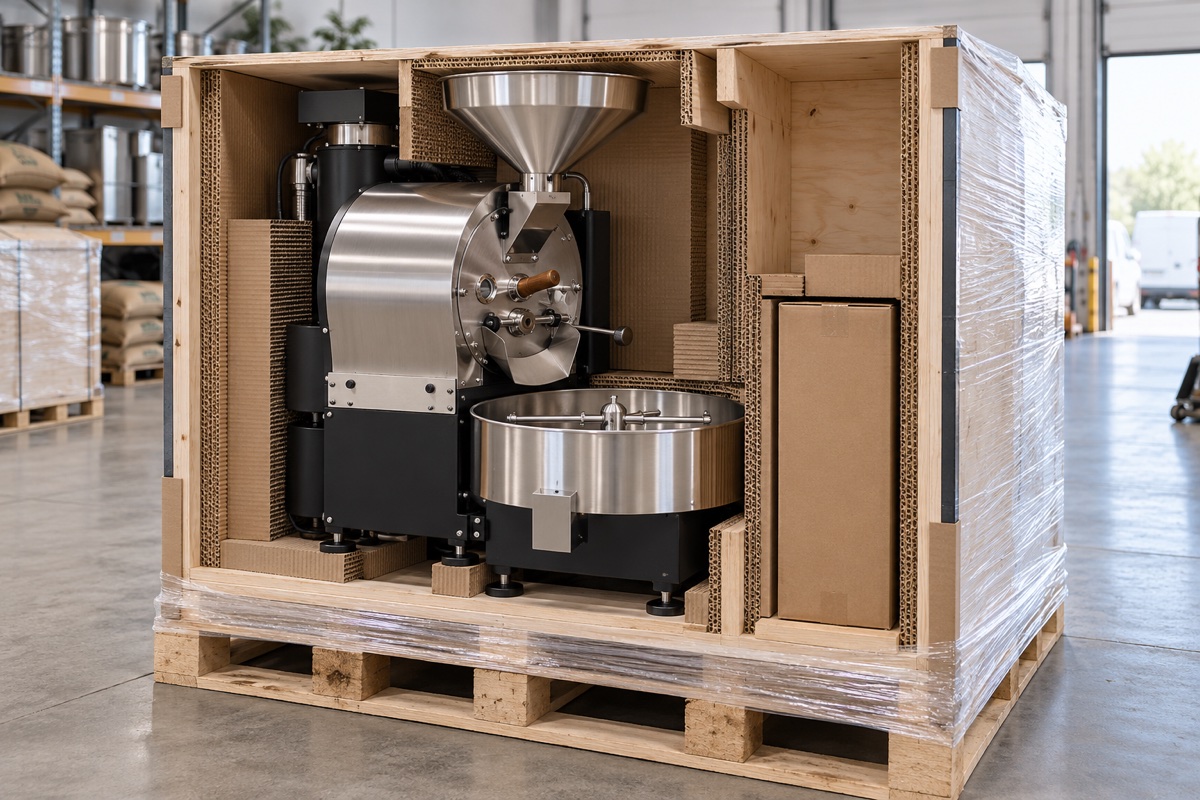
Shipping a coffee roaster involves more than its main body: the cooling tray, exhaust parts, control panel and fittings also need management. Depending on size and weight, the shipment may need a crate, pallet or dedicated skid. Before packing, confirm draining, cleaning, restraint and lifting steps in the current manufacturer guide.
Coordinate pre-shipment preparation with the maker
Prepare the drum, fan, doors and moving parts for transport as specified in the machine manual. Disconnecting gas, electrical and exhaust connections, cooling and cleaning must be handled by qualified technicians. Follow instructions to prevent residual coffee or oil from spilling inside the pack.
Protect the machine finish from scratches and dust, and separately support protruding components such as exhaust sections, trays and sensitive panels. Place accessories in labelled, closed packs so they cannot press against or move around the main unit.
Support the load in a skid or crate
Use product technical information to identify lifting points, centre of gravity and pallet or crate capacity. Support the machine base; do not restrain it by pressing on delicate covers or panels. If its dimensions or mass exceed a standard pallet’s capacity, assess a custom design.
Close the outer pack for the route and carrier handling conditions. Carton sections may use carton tape, while crated pallet loads need appropriate restraint and protection. Stretch film may help unitise the outer load but does not replace vehicle tie-down or crate strength for heavy equipment.
Plan the installation site and receipt conditions
Before dispatch, confirm doorways, ramps, forklift capacity and access to the installation location. Orientation, lifting and stacking marks on the crate should match real handling procedures. Get the carrier’s receipt and damage-reporting terms in writing.
At delivery, inspect crate impact, tip, moisture, fittings and accessory list. Follow the maker’s installation and commissioning guide before operating the machine; document damage and start the service or carrier process.
Sources and further reading
These are general shipping resources, not a substitute for the product maker’s instructions or the carrier’s current rules.
Review packaging for your process
Share the product dimensions, route and handling conditions to review suitable Biz2miz packaging options.
Frequently asked questions
Who should prepare a roaster before shipment?
Qualified technical personnel should handle disconnection, cleaning and moving-part restraint under the manufacturer’s instructions.
Is pallet stretch wrap enough to secure a crate?
No. Wrap may unitise an outer load; crate design, lifting and in-vehicle restraint need separate planning.