
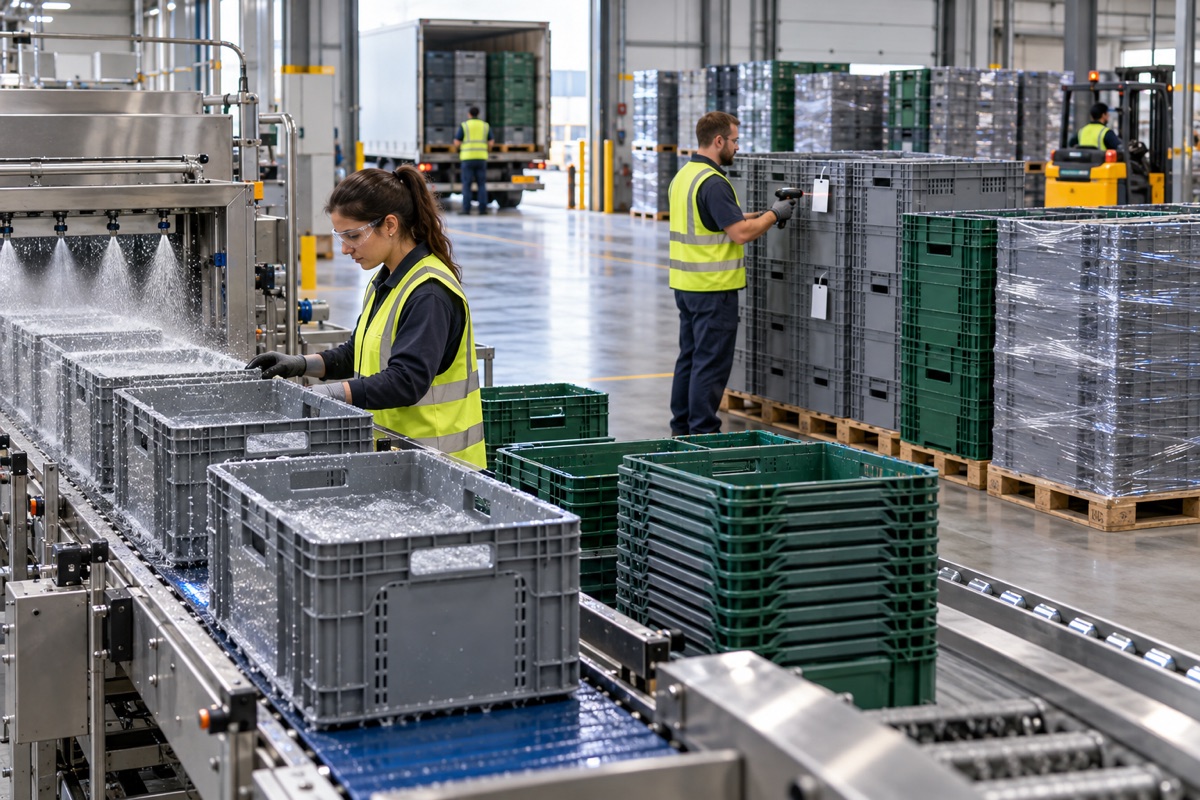
Returnable plastic crates are handled and cleaned repeatedly, so they need a different identification plan from a one-way carton. Directly applying tape may seem easy, but residue, barcode readability, surface compatibility and washing must be considered together.
Identify the crate material and cleaning cycle
Record the crate polymer where known, surface texture, service age and cleaning method. Detergent, hot water, abrasion and drying can affect residue and surface condition.
Check whether the crate has permanent marking, a label pocket or a standard barcode area. If a suitable location exists, identification without direct adhesive may be more consistent over repeated cycles.
Run tape and label through a short cycle test
If using an identification material such as PVC colour tape, trial a small area for adhesion, edge lift and removal residue. Check both on a dry surface and after the actual wash-and-return conditions.
A barcode or QR code should scan while the crate is in use and remain legible after abrasion. If colour tape marks route or contents, document the code so warehouse teams interpret it consistently.
Track crate ownership and loss over reuse
Connect crate ID, customer dispatch, return and cleaning records in one tracking process. Remove temporary shipment labels on return while keeping the permanent crate identity visible.
Where several branches, carriers or customers participate, define when labels change and whether crates return empty or full. After a sample test, check other crate lots too; surface condition and cleaning history can differ.
Review the packaging for your process
Share the product dimensions, packaging sequence and transport route. Our team can review the relevant Biz2miz packaging options against your actual workflow.
Frequently asked questions
Can one-way carton tape be used on returnable crates?
Only after testing the actual plastic, cleaning cycle and removal residue; a permanent identification method may be more suitable.
Where should a crate barcode go?
Select and field-test a location visible during handling, accessible to scanners and protected from abrasion and washing.