
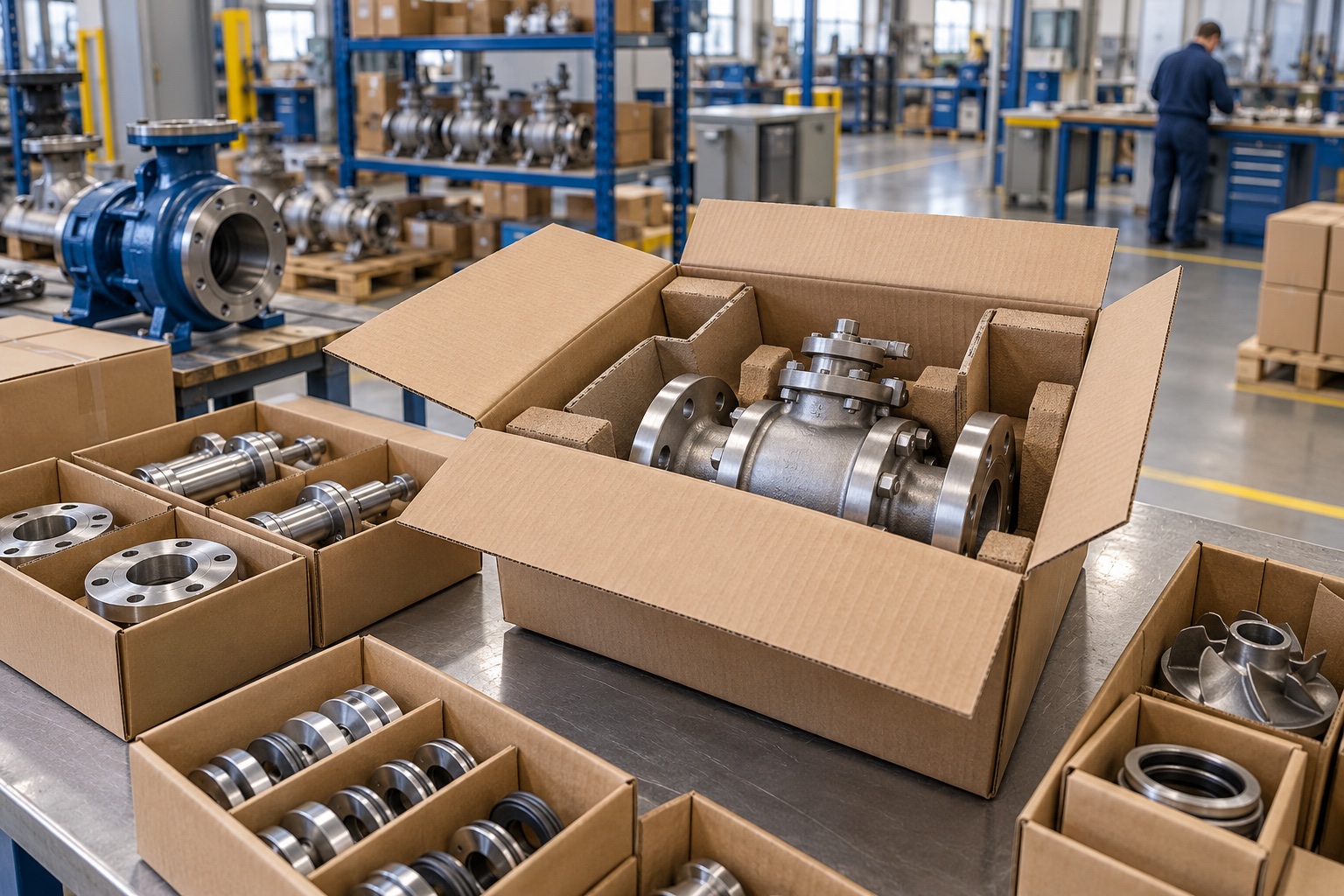
Industrial valves and fittings vary in size, weight and surface geometry. Carton design should prevent movement and protect sensitive connection faces from impact.
This guide provides general packaging information. Validate critical applications with representative trials and supplier instructions.
Identify weight and contact points
Note product weight, protruding stems and flange faces. Rather than relying on thin board around a heavy part, use support that transfers the load to the carton base. Separate points where components could touch.
Pack small fittings with identification
Group gaskets, bolts and adapters in closed small bags or boxes with product identification. Do not leave them loose inside the main valve carton; secure them to reduce scratches and loss.
Verify closure and pallet
Trial carton tape on the actual board using a filled case. For pallet loads, place heavier cartons lower and keep labels visible. At receipt, compare openings, coating damage and missing accessories with the order list.
Request a technical assessment
Share your product dimensions, pallet details, handling method and transport conditions. Our team can help assess appropriate packaging options.
Frequently asked questions
How can flange faces be protected?
Use a suitable separator or protective cap and follow the manufacturer’s handling and closure instructions.
Can bolts and gaskets share a carton with the valve?
They can, provided they are identified separately and secured so they cannot damage the main body.