
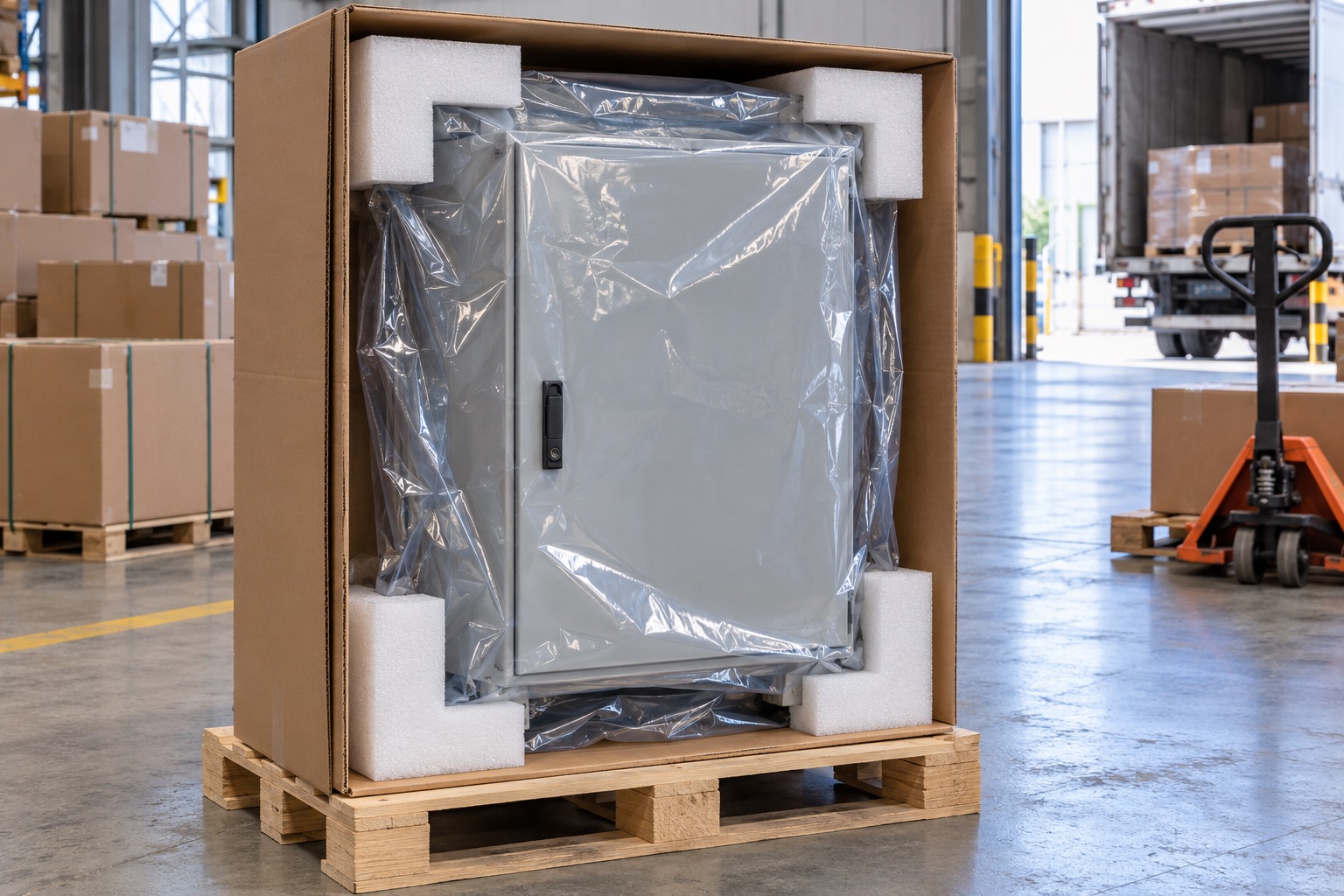
Electrical control cabinets are large products with sensitive enclosures. Shipping packaging should protect doors and finishes and help prevent movement in a vehicle.
This guide provides general packaging information. Validate critical applications with representative trials and supplier instructions.
Support the enclosure and door
Record cabinet dimensions and weight, then ensure the load-bearing base supports the cabinet floor. Do not place direct pressure on doors, locks or protruding connections. Corner guards and separators can help reduce surface damage.
Manage moisture and identification
For outdoor exposure or extended storage, assess moisture protection against manufacturer requirements and transit duration. Before closure, confirm product labels, orientation marks and serial numbers remain visible and match the documents.
Test load restraint
Choose a crate, pallet or outer carton based on product weight and handling. Stretch wrap alone should not be treated as restraint against tipping for a heavy cabinet. Share loading instructions, lifting points and delivery checks with the shipping team.
Request a technical assessment
Share your product dimensions, pallet details, handling method and transport conditions. Our team can help assess appropriate packaging options.
Frequently asked questions
Does a control cabinet need a moisture barrier?
This depends on product protection level, transit time and environment and should be verified against manufacturer instructions.
Can stretch wrap secure a cabinet to a pallet?
It may provide supplementary containment; heavy or tall units need a suitable base and separately designed mechanical restraint.