
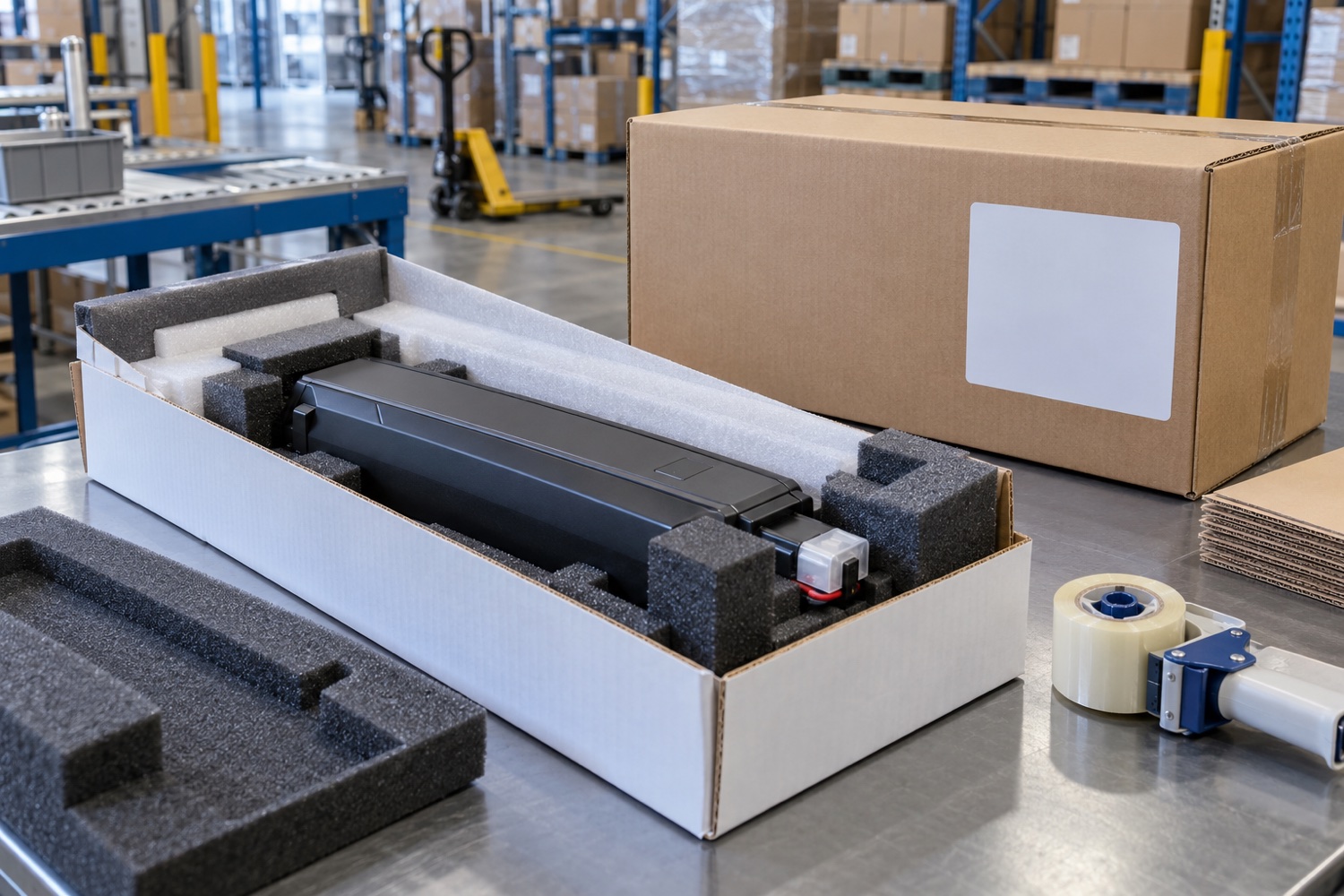
Shipping requirements for e-bike lithium batteries can differ depending on whether the battery is shipped alone, installed in equipment or packed with equipment, as well as on its condition. Confirm current dangerous-goods rules and carrier requirements before choosing the physical pack. Packing tape or stretch film cannot replace special transport requirements or electrical protection.
Classify the battery and shipment scenario
Model, chemistry, capacity, whether the battery is installed and its condition can affect classification. Check the battery label and technical documents; obtain a classification from a safety or dangerous-goods specialist when required. Do not treat damaged or recalled batteries as routine product shipments.
UN Model Regulations and modal rules may be revised. Do not assume the same acceptance conditions for road, sea and air; verify the current requirements of the competent authority and carrier at booking.
Prevent short circuits and movement inside the pack
For batteries shipped separately, protect terminals from contact with conductive objects. Inner packaging should completely enclose the battery; the outer carton must be strong enough to retain the product during normal handling and transport.
For batteries installed in equipment, prevent accidental activation and damage. Internal supports should restrain the housing without crushing it; cables and connectors must not be pulled or bent. Verify cushioning materials against applicable requirements.
Manage marks, documents and closure
Package marks, hazard labels, documents and emergency information depend on battery classification and mode of transport. Do not use a general web guide as the sole source for these decisions; consult a trained responsible person and carrier instructions.
Use packing tape only to close the outer carton; it does not insulate terminals or make a package compliant. Do not cover labels, and remove old shipment marks.
Prepare for receipt and damage response
Before dispatch, use a checklist for model, condition, terminal protection, internal restraint and document match. Trained staff should remove batteries showing leakage, swelling, crushing or heat from the normal workflow.
Give the dispatch team the damage-reporting and emergency-contact process in advance. Identify any carrier or destination that cannot accept the battery before booking.
Sources and further reading
Accessed 28 October 2026. Follow current manufacturer, carrier and applicable regulatory instructions for the actual shipment.
Review packaging for your process
Share product dimensions, pack configuration and shipping route so suitable packaging options can be reviewed.
Frequently asked questions
Can all e-bike batteries ship the same way?
No. Battery type, capacity, installation status, condition and transport mode can change the requirements.
Why are terminal covers important?
Contact with conductive material may create a short-circuit risk; verify the required inner pack and terminal protection under current rules.
Does stretch film make a battery carton compliant?
No. Pallet wrap does not satisfy dangerous-goods classification, package performance or marking requirements.