
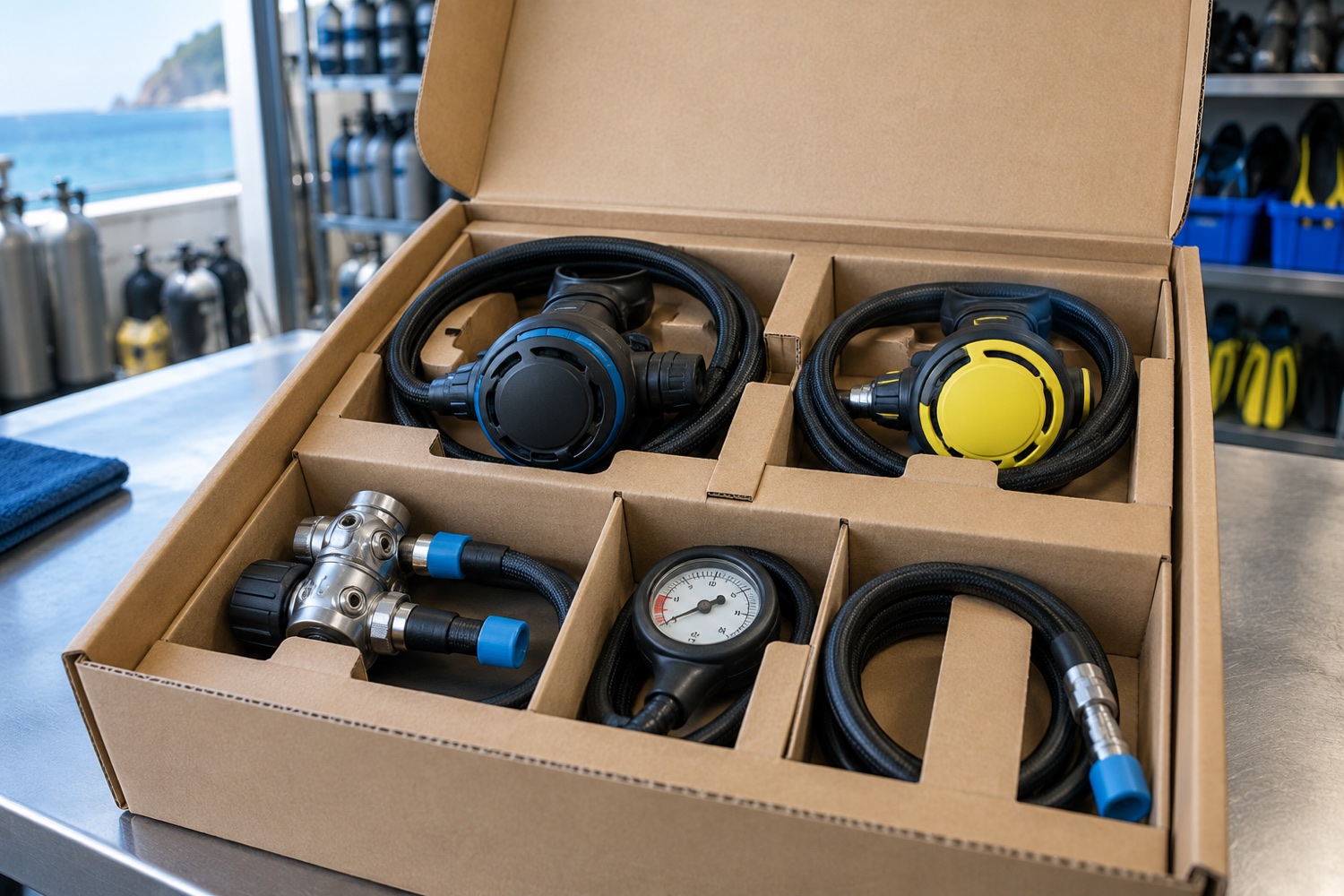
Scuba regulator kits combine several different parts: regulator bodies, flexible hoses, a pressure gauge and connector adapters. During shipping, a sharply bent hose, an impacted gauge or metal fittings striking one another can create inspection and repacking work before use. Pack the set according to the manufacturer’s handling guidance; this guide does not cover shipping pressurised cylinders.
Inventory parts and protect connection ends
List the kit contents by product code and quantity. Fit protective caps to threaded connections and keep open ends away from dust, moisture and impact. Include cap removal and correct part matching in the packing check.
Support each regulator body and second stage separately so it cannot contact metal accessories. Put spare O-rings or small fittings in a closed, labelled accessory bag and a dedicated compartment.
Respect hose bend radius and protect the gauge
Do not force hoses below the bend radius allowed by the manufacturer. Instead of folding them sharply to fit the box, use a wider position, corrugated separator or support around the hose. Check that the hose is not pinched when the carton closes.
Where a pressure gauge is included, protect the dial glass and needle from hard particles and direct pressure. Do not apply adhesive tape to the dial. If visual inspection through the pack is needed, trial a transparent cover that does not press against the gauge.
Design inserts, outer carton and closure
Corrugated compartments should give each part a defined position without squeezing the regulator body or gauge. A layout that prevents parts from spilling together when opened also helps a service or retail team count the kit quickly.
Size the outer carton to reduce excess voids. Seal the closure seams with suitable packing tape and confirm full contact with the board. Tape should not replace the inner compartment that restrains accessories; use it to close the outer carton.
Check storage, shipment and receipt
Store regulator kits in a clean, dry area where cartons cannot be crushed. For pallet shipments, confirm that lower cartons can carry the upper load, the stack stays within the pallet footprint and stretch-wrap tension does not collapse the boxes.
Before dispatch, check kit contents, end caps, hose bends and gauge condition. At receipt, photograph crushed or wet cartons and shifted parts, then follow the manufacturer’s inspection instructions.
Sources and further reading
Accessed 28 October 2026. Follow current manufacturer, carrier and applicable regulatory instructions for the actual shipment.
Review packaging for your process
Share product dimensions, pack configuration and shipping route so suitable packaging options can be reviewed.
Frequently asked questions
Can I coil the hoses tightly to fit the carton?
No. Follow the manufacturer’s bend-radius guidance; a tight coil can place excessive stress on a hose.
Can I cover the gauge dial with packing tape?
Do not apply adhesive tape to the dial. Use a cover that protects against impact and rubbing without pressing on the gauge.
Will stretch film secure parts inside a regulator kit?
No. Internal dividers should separate and support the parts. If used, stretch film is for unitising a suitable pallet load, not inner components.