
Steel coils require careful transport planning because of their mass and circular shape. Packaging can help protect the surface from environmental exposure, while load handling and restraint must be assessed separately using suitable supports and an engineered plan.
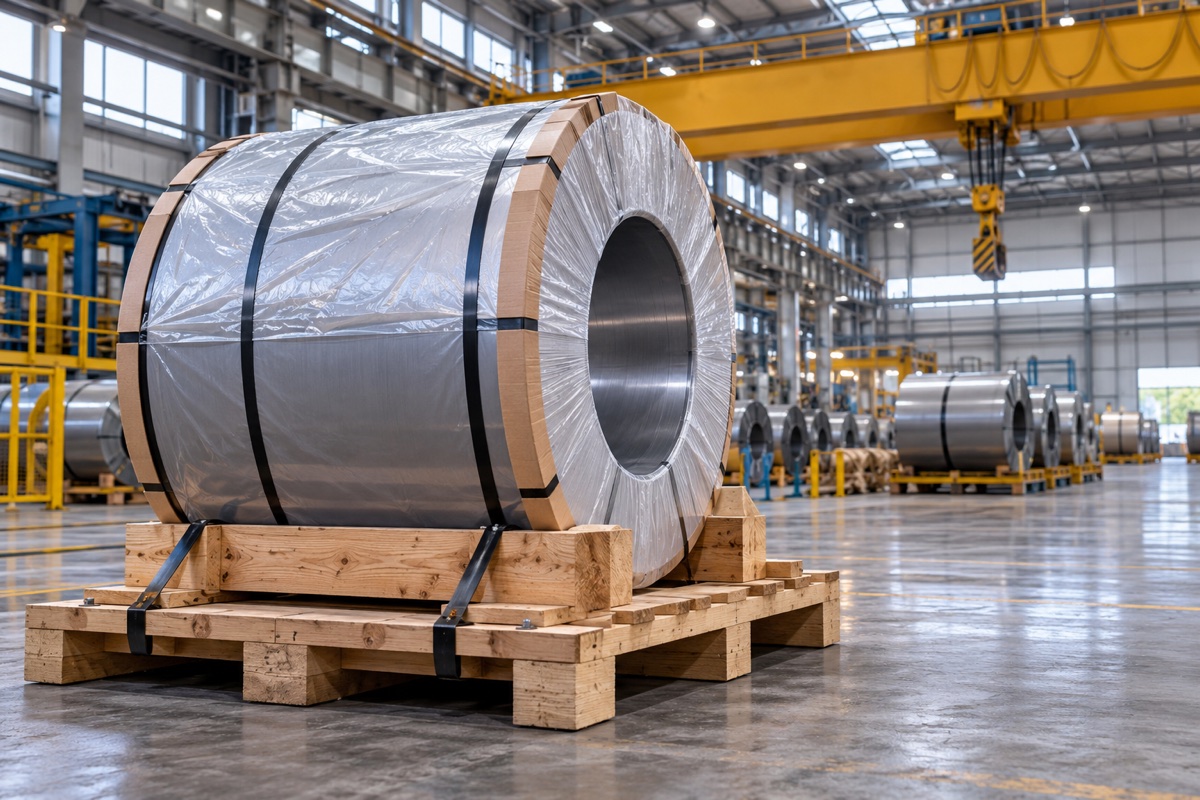
This guide covers “Packaging and Load Checks for Steel Coil Shipments.” Confirm product-specific limits in current supplier documentation and validate the proposed pack under representative handling conditions.
Preserve the supplier’s protection
Keep the supplier’s protection, labels and identification readable during shipment. Inspect the edge, inner diameter and contact points before loading. If extra protective material is considered, verify compatibility with the finish and application method with the product owner.
Plan supports and restraint separately
Determine coil orientation, centre of gravity and cradle using handling-equipment instructions. Suitable chocks or a cradle may reduce movement and rolling; tie-down points must suit the vehicle and load design. Stretch film or outer packaging does not replace mechanical restraint.
Standardise dispatch checks
Match coil number, quality details and order identification to shipping records. Document package condition, edge damage and restraint before loading and on receipt. Isolate any nonconforming goods under the product owner’s procedure.
Request a technical assessment
For “Packaging and Load Checks for Steel Coil Shipments,” share the product and carton dimensions, application method and transport route so the packaging steps can be reviewed against the actual workflow.
Frequently asked questions
Can stretch film secure a steel coil?
Film may provide surface protection or supplementary containment, but it should not be treated as the sole transport restraint for a heavy, rollable load.
Should a coil travel horizontally or vertically?
The suitable orientation depends on coil design, support and supplier instructions; verify the loading plan.