
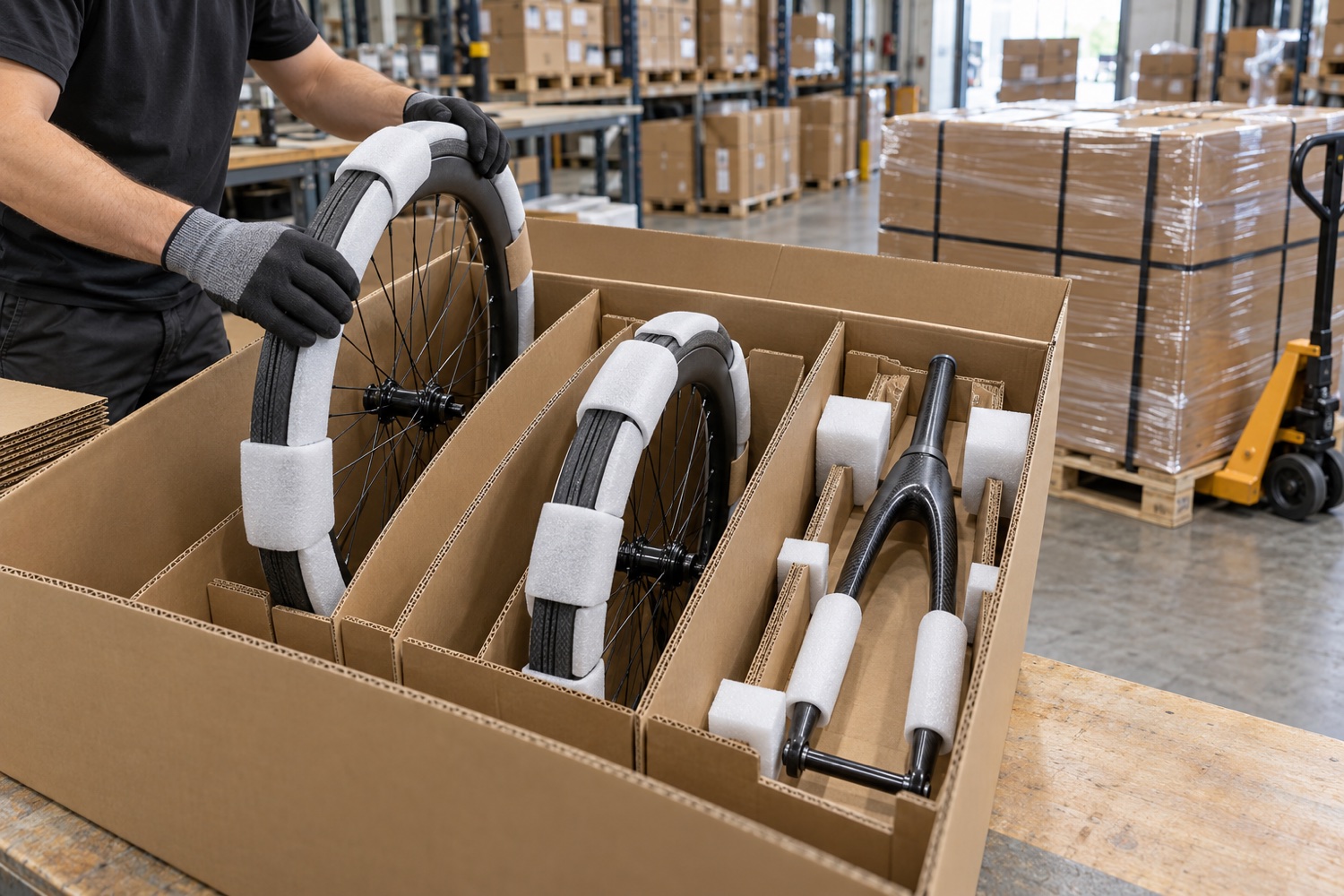
A bicycle wheelset may be light, but spokes, hubs, disc mounts and carbon parts can be damaged if they contact one another. Internal layout matters as much as the outer carton size. For dealer and service shipments, plan part separation, accessory control and possible reuse of the packaging together.
Give wheels and accessories separate positions
Separate each wheel in a protective sleeve and limit axial movement around the hub. Spokes, nipples and metal fittings should not rub against the rim; place a disc rotor in its own flat protected compartment.
If a fork, handlebar or other long component shares the carton, use corrugated partitions or shaped supports. Check that the upper part cannot press onto the item below when the carton is closed.
Set carton size and closure method
Choose a carton that fits the product with its supports and protective sleeves. Excess void space can allow movement; an overly tight pack may affect rim shape or finish. Use a sample carton to check closure and unpacking.
Packing tape should hold continuously along the seam. If the dealer or service team needs to reopen the carton, design the outer closure and inner accessory bags accordingly. Keep product codes and kit contents visible; do not cover barcodes with tape or wrap.
Plan pallet layout for dealer orders
Keep cartons oriented as marked and stack them in even layers. Avoid pallet overhang and unstable projections from mixed box sizes. Do not leave accessory cartons loose on top of wheel cartons.
Stretch film can unitise a dealer pallet, but tension should not crush wheelset cartons. Where carton panels are weak, consider tier sheets and corner boards.
Use a checklist and support returns
At the packing bench, use a checklist for wheel count, left-right matching, hubs, rotors and fitting accessories. A photo standard can help shifts maintain the same layout.
If service or return operations may reuse the box, plan an opening direction that allows access without destroying all the internal dividers. For transit claims, document the outer carton, inner supports and product contact marks separately.
Sources and further reading
Accessed 28 October 2026. Follow current manufacturer, carrier and applicable regulatory instructions for the actual shipment.
Review packaging for your process
Share product dimensions, pack configuration and shipping route so suitable packaging options can be reviewed.
Frequently asked questions
Can a wheel and rotor share one compartment?
Only if they are restrained so they cannot touch and a representative shipping trial confirms the pack.
Should tape secure loose parts inside the box?
Product-compatible dividers and supports are preferred for internal restraint; use tape only on suitable application surfaces.
Is stretch film needed for dealer shipments?
It can help unitise a pallet shipment, but it does not replace protection inside each carton.