
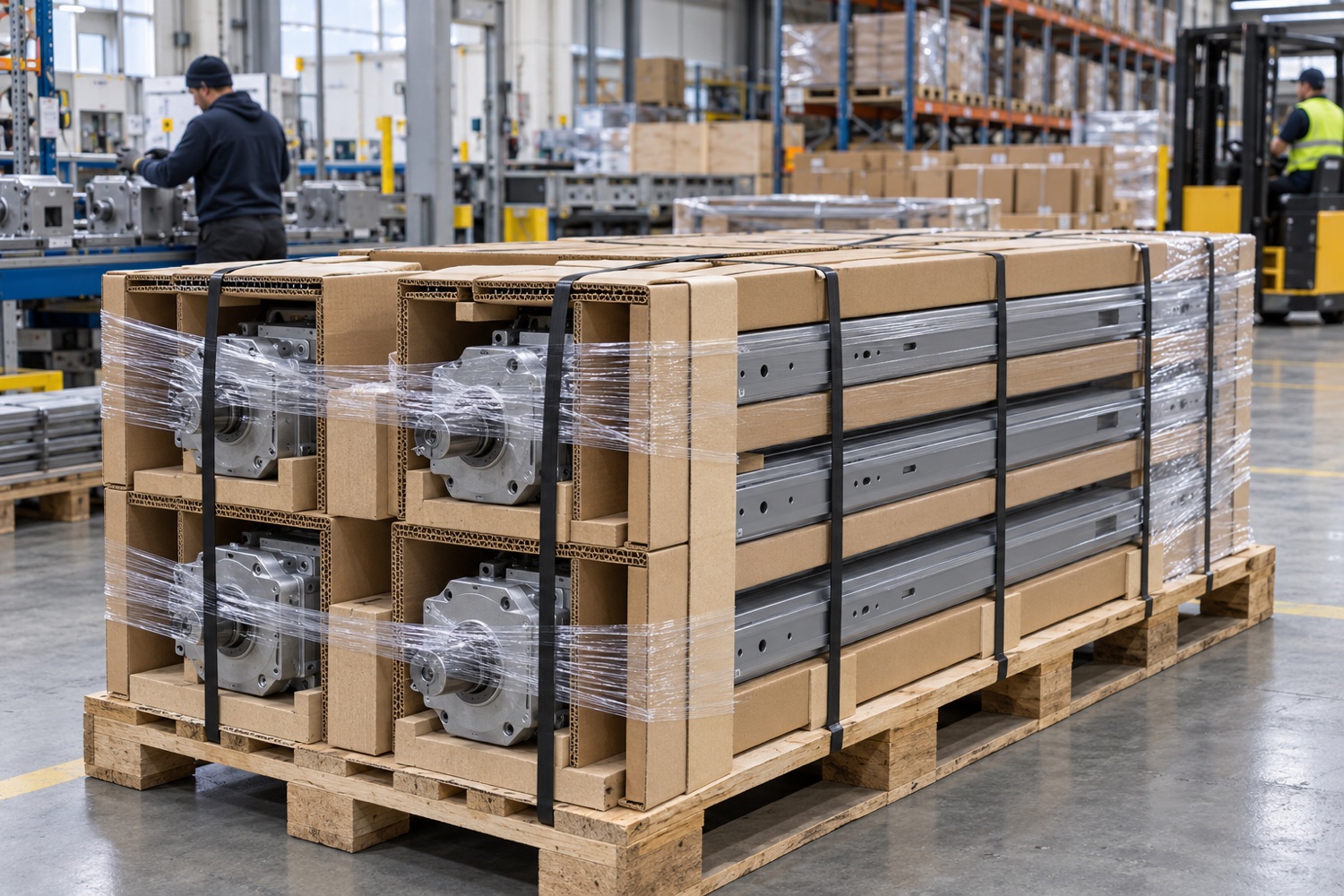
Elevator guide rails and long profile components often travel in bundles or on purpose-built skids rather than standard cartons. The risks include more than surface scratches: unsupported ends, pallet overhang and bundle movement in the vehicle can also cause damage. Plan packaging around length, mass, surface tolerance and handling method.
Support the bundle along its length
Separate rails and fittings by product code and length. Mixing different lengths can leave shorter pieces unsupported or allow movement. Agree support locations and spacing with the product supplier.
Where surfaces are machined or coated, interleaving material should resist scuffing within the bundle. End caps or profile guards may be used, but verify that they do not distort the rail geometry or loosen during lifting.
Restraint and edge protection
Straps must restrain the load without bending the profiles. Use edge protectors to spread force over a broader surface, and set strap spacing according to weight and support points. Avoid excessive tension at a single point.
Packing tape or stretch film may hold light accessories or an outer protective layer in place. Do not use them as the primary restraint for a heavy long load. Follow workplace safety instructions for straps and lifting equipment.
Manage pallet overhang and covers
Choose a skid or pallet suitable for the rail length and check end overhang against supplier and carrier limits. Label lifting and lashing points, plus the load’s weight and length, on a visible face.
Where outdoor staging is possible, a PE cover can help reduce rain and dust exposure. Secure it so sharp ends cannot tear it, prevent water pooling and keep lifting points accessible.
Rehearse loading for the route
Confirm fork spacing, pallet entry direction and vehicle interior dimensions in the loading plan. Check the risk of the long load striking surroundings during turning and docking, using a safe dry run where practical.
Record bundle count, labels, strap tension and protective pieces before dispatch. At arrival inspect pallet movement, loose straps, end damage and surface scratches, then notify the supplier and carrier under the agreed process.
Sources and further reading
Accessed 28 October 2026. Follow current manufacturer, carrier and applicable regulatory instructions for the actual shipment.
Review packaging for your process
Share product dimensions, pack configuration and shipping route so suitable packaging options can be reviewed.
Frequently asked questions
Is stretch film alone enough for long rails?
No. Film can help unitise a load, but heavy long goods need suitable supports, a skid or pallet and mechanical restraint.
Can rail bundles overhang the pallet?
Limits depend on the product and handling equipment. Do not allow overhang without confirming safe support and transport instructions.
When should a PE cover be used?
It can help when rain or dust exposure is expected, provided it does not block lifting access or trap water.