
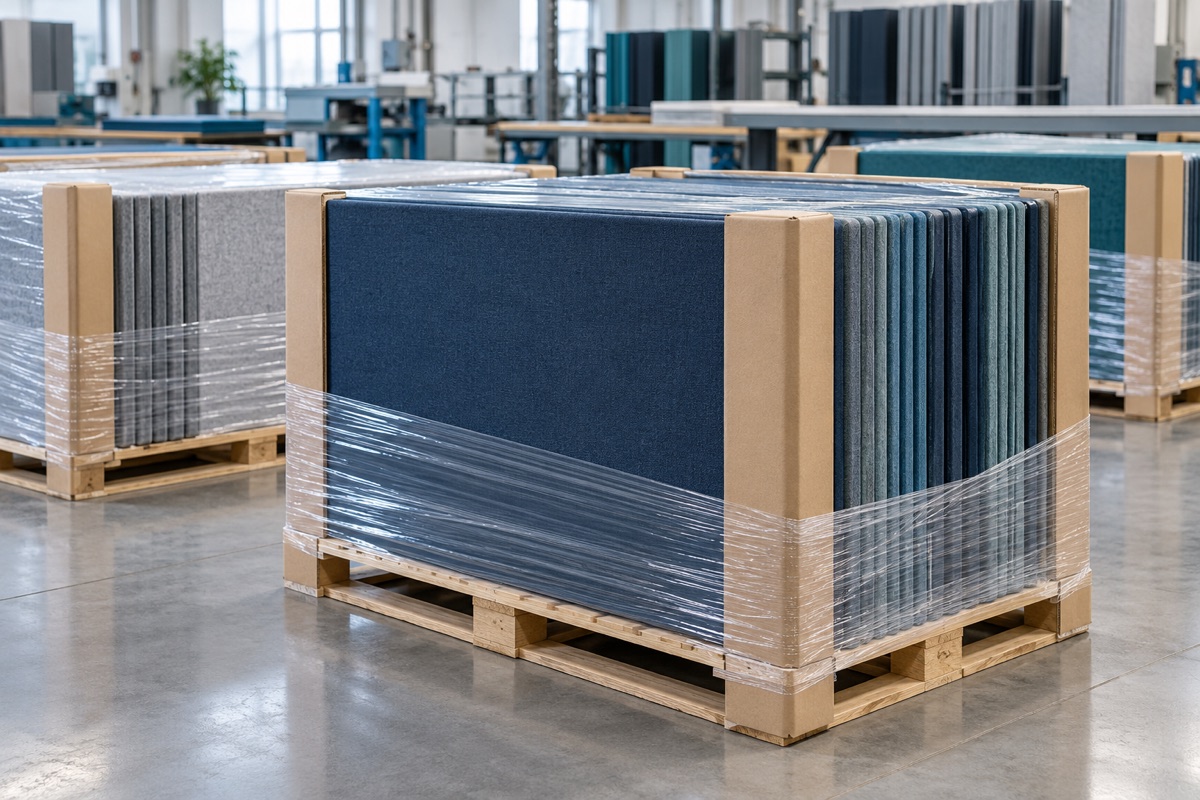
Surface texture, panel edges and flat geometry shape the packaging plan for acoustic panels. Keeping panels together on a pallet is not the same as protecting the face or edges; these aims may require separate materials and checks.
Classify panel faces and edge construction
Record fabric, painted, coated or exposed-edge finishes by product family. Sensitivity to direct rubbing may differ; interleaving paper or protection should be compatible with the surface and must not mark it.
Trial whether corner and edge supports protect the panel without squeezing it. For several panels in one carton, check how load transfers to lower layers and whether supports shift in transit.
Separate the carton and outer-cover layers
If a carton is used, size it to the panel and verify that void space does not allow movement. Carton tape closes the flap joint; it does not replace a protective layer on the panel face. Trial it with the actual board and shipment weight.
Do not treat a pallet hood or stretch wrap as the only surface-protection measure. Wrap can be assessed for unitising the pallet; dividers and supports are still needed for edge crush and face rubbing.
Record pallet stability and receipt inspection
Check that the pallet footprint supports the panel and carton base, layers do not overhang and the load is compatible with the carrier. Trial wrap tension on a real panel pallet and inspect for bending, corner pressure and obstructed visibility.
At receipt, record face abrasion, edge damage, package opening and quantity differences. Matching photos to panel codes and pallet labels helps suppliers and receivers agree a corrective plan.
Review the packaging for your process
Share the product dimensions, packaging sequence and transport route. Our team can review relevant Biz2miz options against your actual workflow.
Frequently asked questions
Does stretch wrap protect an acoustic panel face from scratching?
Stretch wrap should be considered for pallet-level unitisation. Use a separately assessed interleaf or surface layer for the panel face.
Should acoustic panels ship upright or flat?
Follow the product design, packing instruction and carrier conditions; validate each orientation using a representative sample and stack load.