
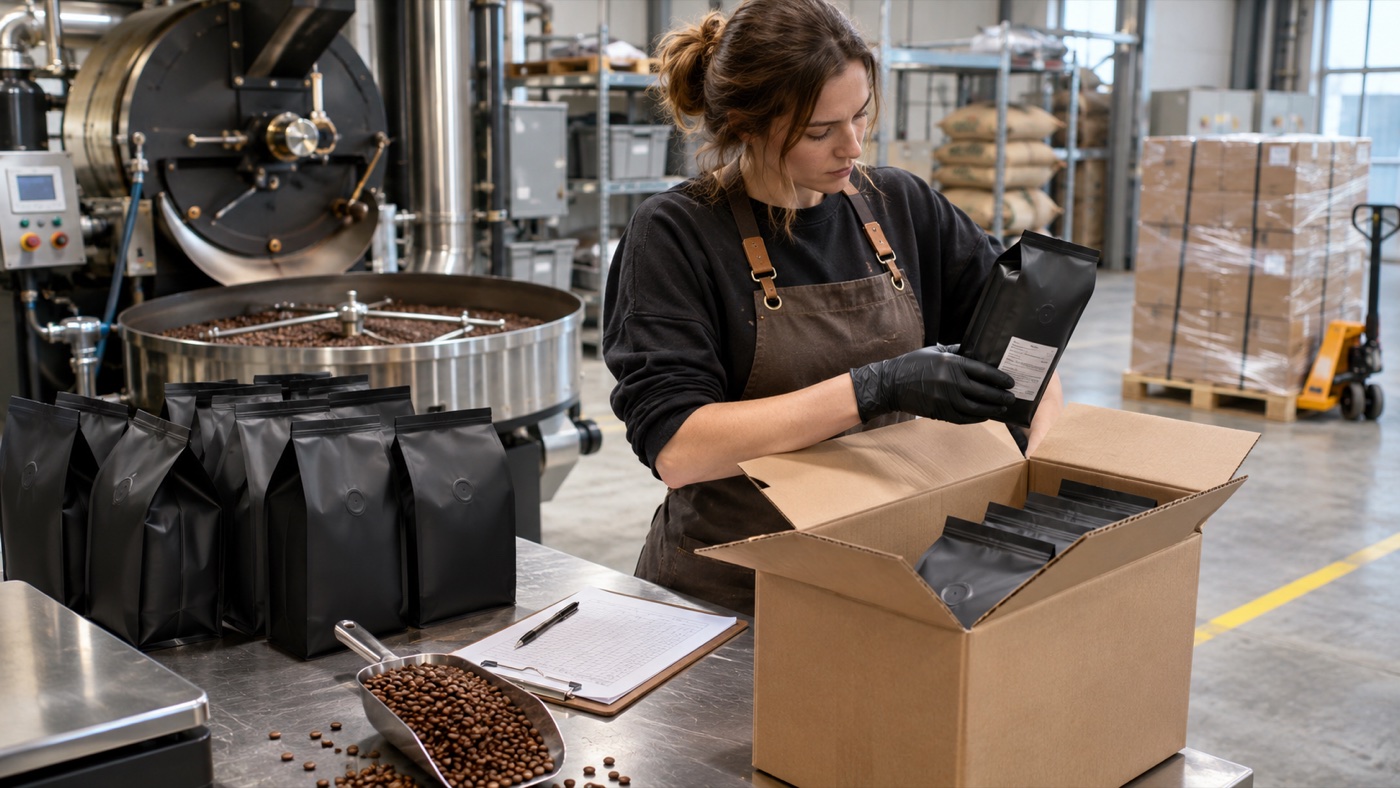
In roasted coffee, the primary pack that protects product quality serves a different purpose from case packing and pallet dispatch. Do not treat a valve-equipped barrier pack as a substitute for an outer carton or pallet restraint; plan each layer for its own job.
Match the retail pack to the product and process
Roasted beans and ground coffee continue to release gas after roasting. The pack and valve need to be validated by the producer against the roast, grind, time of packing and intended shelf life. One film structure or valve configuration should not be assumed to suit every coffee.
The Specialty Coffee Association’s literature review on coffee shelf life discusses how environmental conditions such as oxygen, moisture and temperature relate to sensory changes. Before choosing an outer case, inspect the primary pack’s heat-seal area, valve surround and batch-code legibility. Carton tape or printed carton tape must not be presented as a closure for the retail pouch.
Reduce crushing and mix-ups inside the case
Set case dimensions around the real pack size and loading pattern. Excess void can let pouches collide in transit; an overly tight fit can distort flexible packs. Build a trial case with actual products and check that the flaps meet cleanly and the tape contacts dry, dust-free board.
When one order contains several roasts, grinds or net weights, use dividers or separate inner cases to keep SKUs apart. Match the product code, lot and quantity on the carton to the order record. Retail design, tasting notes and required food information belong on the approved primary pack; a logistics label should not cover them.
Pallet and dispatch checks
Stack cases evenly on the pallet without overhang. Stretch film can help unitize the pallet; it does not provide the coffee pouch’s barrier function. Set restraint tension so the cases are not crushed, keep the logistics label visible and trial the load on a representative route.
At dispatch and receipt, record the same fields: item code, lot, case count, pallet identifier and condition. The GS1 logistics label guideline covers identification of logistics units such as pallets. Consistent identification helps prevent roast mix-ups and supports order traceability.
A practical verification list
Include valve and seal appearance, movement inside the case, label readability and pallet stability in the sample check. Evaluate a packaging change with representative product, cases and a real distribution route before applying it to all production. Base barrier and shelf-life decisions on the coffee producer’s data and the packaging supplier’s technical information.
Sources and further reading
- Specialty Coffee Association — A Literature Review on Coffee Staling
- GS1 — Logistic Label Guideline
- ISTA — Getting Started with Design & Testing
Accessed 3 November 2026. Confirm current product specifications, carrier requirements and applicable local rules before shipment.
Plan packaging around your operation
Share product dimensions, case layout and dispatch conditions so the suitable Biz2miz packaging options can be reviewed.
Frequently asked questions
Does the valve on a coffee bag replace carton tape?
No. The valve is part of primary-pack gas management; carton tape closes the outer case, while stretch film helps unitize the pallet.
How should carton size be selected?
Consider actual pack dimensions, case layout, distribution conditions and a representative trial.
Does pallet stretch film protect coffee from moisture?
Pallet wrap helps hold the load together; it does not replace the barrier properties of the primary pack.