
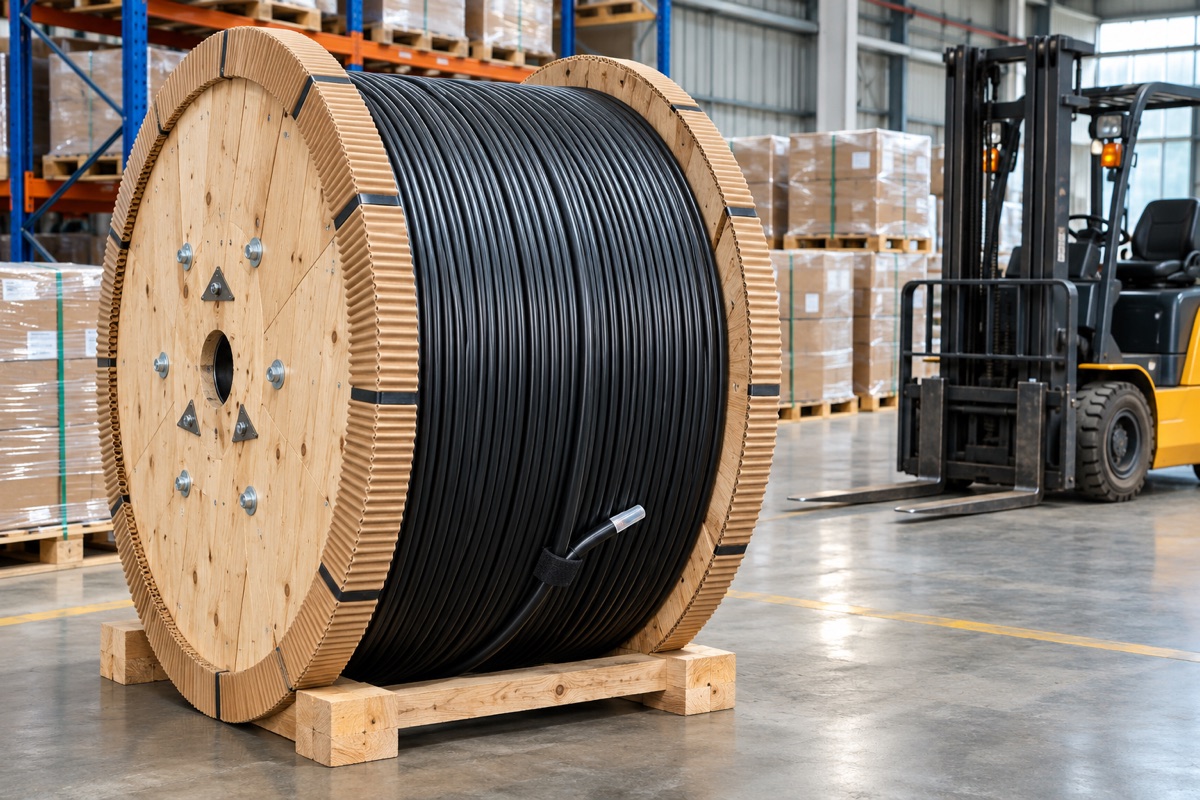
For fiber-optic cable shipments, the reel body, flanges and loading method matter alongside the cable itself. Rather than treating the cable like an item inside an ordinary carton, use the reel and cable maker’s handling instructions as the starting point and coordinate packaging, marking and transport in one dispatch plan.
Identify each reel and follow the manufacturer’s instructions
Match cable type, length, lot, net weight, reel number and destination on the dispatch order. Reel diameter, total mass and flange design vary, so do not specify forklift, crane or ramp handling with one generic instruction. Keep orientation and lifting marks visible to the dispatch team.
Prysmian’s cable-laying and accessory-installation guideline emphasizes following manufacturer directions for transporting and storing cable drums. This article does not set a lifting point or minimum drum diameter for a particular reel; verify those details against the cable type and manufacturer drawing.
Protect flanges and cable ends before dispatch
Inspect the flanges for cracks, loose fasteners, protruding nails or sharp edges that could contact the cable. Where appropriate, add a suitable edge protector around the flange; check that it does not press on the cable or cover handling and stacking marks. Secure and protect the cable end using the manufacturer’s method.
Wrapping a reel completely in stretch film does not guarantee optical or electrical performance, water resistance or mechanical strength. If weather protection is needed, assess the cable maker’s permitted cover and condensation conditions at the site; keep covers clear of equipment gripping areas.
Loading, vehicle restraint and identification
Transport the reel in a position permitted by the manufacturer. Improperly laying it down, dropping it or placing forklift forks against an unsuitable part of the flange can create damage risks. Restrain the reel against rolling and sliding with suitable chocks and tie-downs. Make sure straps do not press directly on the cable or a weak flange section.
If an outer cover or PE sheet is used, ensure tape and labels do not obscure barcode scanning or reel identification. Link the order, lot and logistics-unit details using a GS1-aligned label approach, and retain the reel or drum number in the dispatch record.
Checklist and damage records
Before loading, use a short checklist for flange condition, cable end, reel orientation, handling marks, vehicle restraint and delivery label. Repeat the same checks at unloading and link photos or damage records to the reel number. This makes handoff points between production, warehouse and carrier easier to review.
Trial a representative shipment before changing the packaging or restraint method. ISTA’s package-design and distribution-testing guidance helps select a test appropriate to the distribution channel; testing and lifting plans for heavy cable reels should be determined with qualified engineering and workplace-safety review.
Sources and further reading
- Prysmian — Guideline for Laying Cables and Installation of Sleeves
- ISTA — Getting Started with Design & Testing
- GS1 — Logistic Label Guideline
Accessed 7 November 2026. Confirm current product specifications, carrier requirements and applicable local rules before shipment.
Plan packaging around your operation
Share product dimensions, case layout and dispatch conditions so the suitable Biz2miz packaging options can be reviewed.
Frequently asked questions
Should a fiber-optic reel be fully wrapped in stretch film?
Follow the reel maker’s instructions. Stretch film may help unitize a load but is not a guarantee of cable performance or water resistance.
How should a reel be restrained in a vehicle?
Follow orientation and handling marks, then prevent rolling and sliding with suitable chocks or tie-downs approved for that reel.
What can carton tape do on a reel shipment?
It may close seams on a suitable outer pack or cover. It does not replace mechanical reel restraint or manufacturer-approved cable-end protection.